AKIO NARIMATSU
Essential Safety Protocols for Navigating Japan
- Digital Breadcrumbs: Always enable “Share My Location” via Google Maps or a messaging app with every member of your group. In the dense urban grids of Kyoto or Tokyo, GPS is your most reliable tether.
- The Physical Backup: Carry a physical business card from your hotel at all times. If your phone dies or you encounter a significant language barrier, handing this to a taxi driver or a police officer is the fastest way to find your way back.
- The Morning Snapshot: Take a quick photo of your travel companions every morning. If someone goes missing, having a current photo showing exactly what they are wearing that day is invaluable for local authorities.
- Designated Rally Points: Before entering crowded landmarks like Fushimi Inari or Kiyomizu-dera, pick a specific, unmissable landmark (like a specific gate or statue) as a “lost and found” meeting spot.
The Invisible Challenge: Beyond the Guidebook Safety Net
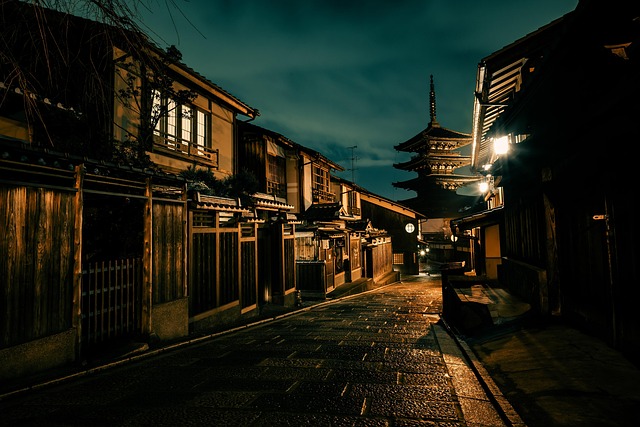
Most guidebooks paint Japan as a flawlessly navigable utopia. While it is arguably the safest travel destination in the world, they often fail to mention the profound psychological disorientation that can occur when the “perfect” system breaks down. The “real” problem isn’t crime; it’s the density and the architectural homogeneity of traditional neighborhoods. In places like Kyoto’s Gion district or the winding alleys of Higashiyama, every street can look identical to the untrained eye. When a group member vanishes into a crowd, the combination of a foreign language, unfamiliar signage, and the high-speed flow of pedestrian traffic can turn a minor separation into a genuine crisis in seconds. The frustration isn’t just being lost; it’s the realization that without a Japanese phone number or local data, you are effectively invisible to the grid.
Field-Tested Solutions for Emergency Situations
In the event of a separation or a missing person situation, there are several “insider” hacks that go beyond simply calling the police. First, locate the nearest Koban (police box). These are small, neighborhood-level stations found near almost every major intersection and train station. Unlike larger precincts, Koban officers are specifically trained in neighborhood wayfinding and community assistance.
Another overlooked solution is the use of JR Station Master offices. If you are separated within the rail network, do not just wander the platforms. Go to the ticket gate and ask for the “Station Office.” They have internal communication systems that span the entire city’s rail network and can often locate individuals moving through different stations much faster than external authorities. Furthermore, if you are using a portable Wi-Fi rental, ensure the device is carried by the person most likely to get lost, rather than the “group leader,” as the leader is usually better equipped to find help.
The Insider Perspective: Navigating the Cultural Grid
As someone who has spent years working within the Japanese tourism industry, I’ve seen that the biggest mistake travelers make is over-relying on technology while ignoring local infrastructure. Japan is built on a “community watch” philosophy. If you find yourself in a situation where a companion is missing, do not hesitate to approach the staff at a Konbini (convenience store). These stores are often designated as “Safety Stations” for women and children and have direct lines to emergency services.
Understanding the layout of a Japanese city is also key. Addresses in Japan are not based on street names but on blocks and districts. This makes “wandering until you find a street sign” a losing strategy. My ultimate advice is to integrate into the local rhythm: use the Koban system early, keep your hotel’s name written in Japanese characters, and never underestimate how quickly a crowded shrine can swallow a distracted traveler. Safety in Japan isn’t just about the absence of danger; it’s about the presence of a plan.
KEYWORDS: kyoto police box, lost person, japan travel safety
Photo: Pixabay / Pixabay License