AKIO NARIMATSU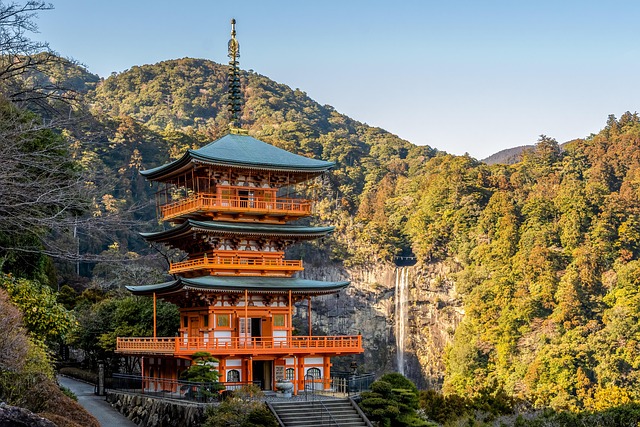
- Rent your vehicle at Kansai International Airport (KIX): To maximize your time in the Kii Peninsula, pick up your rental car immediately upon arrival at KIX rather than starting from central Osaka. This avoids city traffic and puts you directly on the path to the coast.
- Time your visit to Hashiku-iwa for low tide: These dramatic volcanic pillars in Kushimoto are best experienced when you can walk out among the tide pools, offering a perspective you simply can’t get from the roadside observation deck.
- Book a “maguro” (tuna) breakfast in Katsuura: This region is famous for its fresh, non-frozen tuna. Skip the hotel buffet for one morning and head to the local market area near the harbor for the freshest sashimi you will ever taste.
- Download offline maps for the Kumano Kodo interior: While the coastal roads have excellent reception, the mountain passes around Hongu Taisha can be spotty. Pre-loading your navigation ensures you won’t miss the small turn-offs for hidden shrines.
The Invisible Barrier: Why the Kii Peninsula Defies Standard Itineraries
Most travelers look at a map of Japan and see the Kii Peninsula as a small “thumb” protruding south of Osaka. On paper, the distances look manageable. However, the “real” problem that guidebooks gloss over is the deceptive geography of Wakayama. The rugged, mountainous interior and the winding coastal roads mean that transit times are often double what you would expect. Relying on the limited train network forces you into a rigid schedule that misses the true magic of the region: the secret coves, the mountain-top overlooks, and the ancient shrines tucked away from the tracks.
The frustration of the “train-only” traveler in Wakayama is palpable. You end up spending six hours a day on platforms and local buses, arriving at iconic sites like Nachi Falls just as the tour buses descend. To truly unlock this region, you must abandon the rails and embrace the freedom of the road.
Field-Tested Strategies for the Ultimate Wakayama Loop
The “Clockwise” Coastal Strategy
The most efficient way to conquer the peninsula is a four-day loop starting from the west and moving east. By heading south toward Shirahama first, you ease into the trip with white sand beaches and coastal onsens. This sets the stage for the dramatic transition into the rugged cliffs of Kushimoto and finally the spiritual crescendo of the Kumano Sanzan shrines in the east. This flow keeps the most breathtaking scenery—the 133-meter Nachi Falls—as the centerpiece of your journey rather than an exhausting day-trip from a major city.
The Secret of the Michi-no-Eki
Experienced road-trippers in Japan know that the “Michi-no-Eki” (Roadside Stations) in Wakayama are more than just rest stops; they are destinations. In areas like Hongu and Tanabe, these stations serve as hubs for hyper-local produce, artisanal crafts, and high-quality regional cuisine that rivals upscale restaurants. They are the best places to stock up on mehari-zushi (rice balls wrapped in pickled mustard leaves), the perfect portable fuel for a hike along the ancient pilgrimage trails.
Logistical Mastery at Nachi-Katsuura
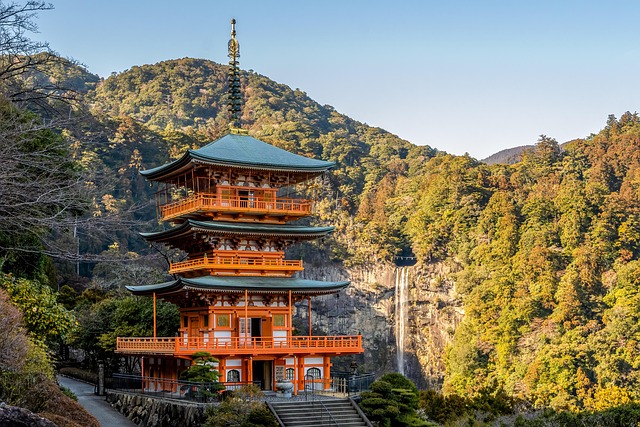
To see Nachi Taisha and the Seiganto-ji pagoda without the crowds, stay overnight in the fishing port of Katsuura. By staying locally, you can reach the falls by 7:30 AM, an hour before the first tourist buses arrive from distant hubs. This allows for a meditative experience at the falls, where the only sound is the roar of the water and the distant chanting of monks.
The Insider’s View: Why Wakayama is Japan’s Spiritual Frontier
From an industry perspective, Wakayama represents the “Deep Japan” that luxury travelers and seasoned explorers are currently craving. While Kyoto offers the refined beauty of a museum, Wakayama offers a living, breathing landscape where nature and divinity are indistinguishable. The Kumano Kodo is not just a hiking trail; it is a thousand-year-old spiritual artery.
When you drive through the cedar-scented mist of the Kii Mountains, you aren’t just moving between tourist spots; you are retracing the steps of emperors and pilgrims. The true luxury of a Wakayama road trip is the ability to stop the car at an unmarked trailhead, walk five minutes into the forest, and find yourself standing before a moss-covered stone deity in total silence. In an increasingly crowded world, that kind of solitude is the ultimate travel premium.
KEYWORDS: wakayama road trip, nachi falls, kumano kodo
Photo: Pixabay / Pixabay License