AKIO NARIMATSU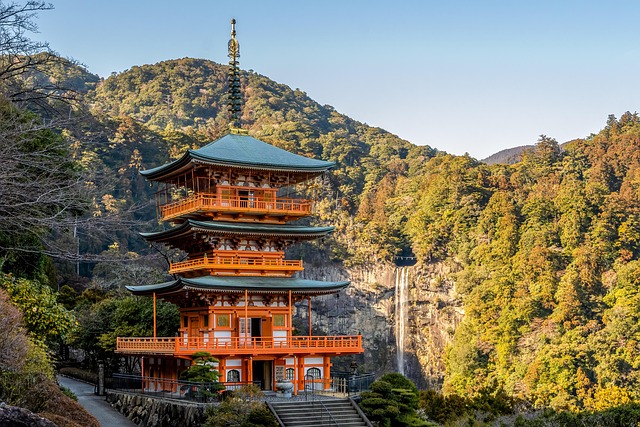
- Leverage the Koyasan-Kumano Access Bus: Do not backtrack to Osaka. Utilize the direct seasonal bus link between Koyasan and Hongu Taisha to save nearly five hours of transit time.
- Pre-arrange Luggage Forwarding: Use a takuhaibin service to send your primary suitcases from Osaka or Kyoto directly to your post-Wakayama destination, carrying only a daypack for the pilgrimage trails.
- Prioritize a Kii-Katsuura Base: Stay in this coastal fishing town rather than Nachisan itself; it offers superior seafood, authentic onsen, and more frequent transport links to the falls.
- Cash is Mandatory: While Tokyo is increasingly digital, the rural bus drivers and remote temple offices in Wakayama remain strictly cash-only environments.
The “V-Shape” Logistics Trap
The most significant frustration travelers encounter when planning a Wakayama itinerary is what I call the “V-Shape Trap.” On a map, Koyasan and Nachi Falls appear relatively close in the southern Kansai region. However, the rugged, mountainous spine of the Kii Peninsula makes direct travel between them geographically impossible by train. Standard guidebooks often gloss over the reality that moving between these two spiritual pillars typically requires a long, arduous journey back toward the northern coast or a grueling five-hour bus ride through winding mountain passes. Many travelers lose an entire day to transit, arriving at the majestic Nachi Falls exhausted rather than inspired.
Field-Tested Strategies for a Seamless Pilgrimage
To master this route, the secret lies in reversing the traditional “top-down” itinerary. By starting at Nachi Falls via the coastal Limited Express Kuroshio train and working your way “up” toward Koyasan, you align your travel with the most frequent bus schedules. This sequence also allows you to end your journey in the meditative silence of a temple stay (shukubo), which is far more restorative after the physical exertion of the Kumano Kodo trails.
Another essential workaround involves the timing of the Okunoin Cemetery. While the evening tours are popular, the “insider” move is to visit at dawn. You will avoid the tour groups and witness the monks delivering ritual meals to Kobo Daishi in silence—a profound experience that remains the spiritual heartbeat of the mountain. For those visiting Nachi Falls, skip the midday rush by taking the first bus from Kii-Katsuura at 6:45 AM. You will have the iconic view of the Three-Story Pagoda and the waterfall to yourself for nearly an hour before the first tour buses arrive from Tanabe.
The Industry Insider Perspective: Beyond the Photo Op
As a specialist in Japanese inbound tourism, I view Wakayama not as a series of checkpoints, but as a transition between two distinct types of Japanese spirituality: the “static” and the “dynamic.” Koyasan represents the static—esoteric Shingon Buddhism, seated meditation, and the stillness of the forest. Nachi and the Kumano Kodo represent the dynamic—the physical act of movement, purification through nature, and the power of falling water.
The mistake most travelers make is trying to “do” Wakayama in three days. To truly honor the site’s UNESCO heritage status, four days is the minimum requirement. This extra day isn’t for more sightseeing; it is “buffer time” to account for the region’s slower pace and the inevitable physical fatigue of the pilgrimage. In the travel industry, we often say that while Tokyo is about the destination, Wakayama is the only place in Japan where the logistics are the pilgrimage. When you stop fighting the slow transit and embrace the rhythm of the peninsula, the true value of the Kii region reveals itself.
KEYWORDS: Koyasan temple stay, Nachi Falls, Kumano Kodo trail
Photo: Pixabay / Pixabay License