AKIO NARIMATSU
Essential Tips for Your Kyushu Expedition
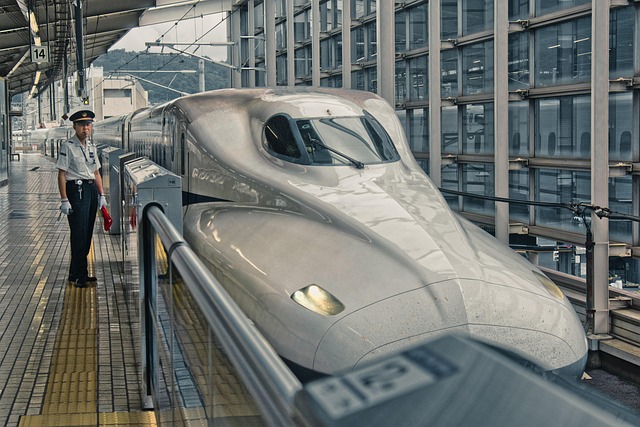
- Secure the JR Kyushu Rail Pass early: Unlike the national pass, the Kyushu-specific versions (All Kyushu, Northern, or Southern) offer incredible value and allow for easy seat reservations on the island’s famous “Design & Story” luxury sightseeing trains.
- Leverage the “SunQ” Bus Pass: For areas where the tracks don’t reach—such as the mystical Takachiho Gorge or the volcanic heights of Mt. Aso—the SunQ bus pass is your most cost-effective tool for a car-free itinerary.
- Utilize Hands-Free Travel: Use Takkyubin (luggage forwarding) between major hubs like Fukuoka and Kagoshima. Kyushu’s limited express trains have modest overhead storage, and navigating rural stations with heavy suitcases is a logistical nightmare.
- Download the “Nishitetsu” App: While Google Maps is reliable in Tokyo, local bus timings in Kyushu are often more accurately reflected in the regional Nishitetsu transit apps.
The “Hidden Logistics Gap” Guidebooks Ignore
Most travel guides paint a portrait of Japan as a land of seamless, high-speed connectivity. While this holds true for the Shinkansen corridor between Tokyo and Osaka, Kyushu presents a unique challenge: the “Rural Transportation Trap.” Travelers often plan their itineraries based on distance rather than frequency. They see that a mountain village is only 40 kilometers away and assume a quick transit, only to discover upon arrival that the local bus runs just three times a day.
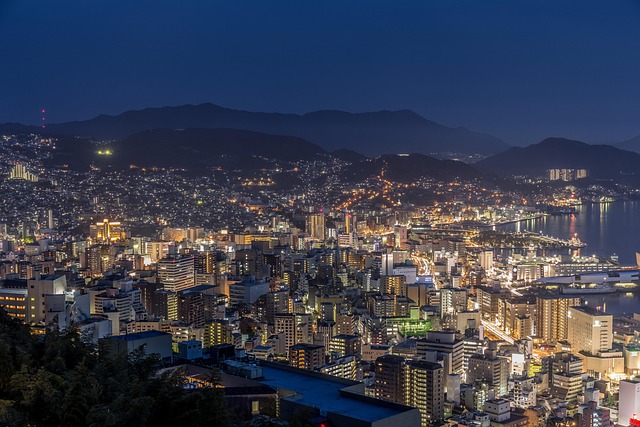
The genuine frustration lies in the transition from the hyper-efficiency of Fukuoka’s subway to the languid pace of the central highlands. Without a car, the psychological toll of missing a single connection in a place like Kurokawa Onsen can derail an entire day of sightseeing. Guidebooks rarely mention that in Kyushu, your schedule is dictated not by your desires, but by the rigid pulse of local transit lines that cater more to school children and retirees than to international tourists.
Field-Tested Workarounds for the Car-Free Traveler
To conquer Kyushu without a steering wheel, you must adopt a “Hub and Spoke” strategy rather than a linear “A-to-B” journey. Instead of moving hotels every night, establish bases in Kumamoto and Fukuoka. Kumamoto, in particular, serves as the perfect gateway; it allows you to strike out toward Mt. Aso or the Amakusa Islands via express buses while keeping your heavy luggage stationary.
Another insider hack is prioritizing the Limited Express trains over local lines, even for short distances. The time saved is exponential, and the comfort level allows you to treat the transit as part of the sightseeing experience. For those crossing over from South Korea via the ferry to Fukuoka, consider the “Reverse Route.” Most tourists start in Fukuoka and head south; by taking a domestic flight or Shinkansen immediately to Kagoshima and working your way back north, you often find yourself moving against the crowd, ensuring easier seat reservations and quieter ryokan stays.
The Insider’s Perspective: Why Kyushu Demands a Slower Lens
As someone who has navigated the intricacies of Japanese tourism for decades, I view Kyushu as the “Soul of Japan.” It lacks the frantic neon pulse of Shinjuku, replacing it with geothermal steam and ancient caldera landscapes. However, the biggest mistake modern travelers make is trying to “conquer” the island in a fortnight.
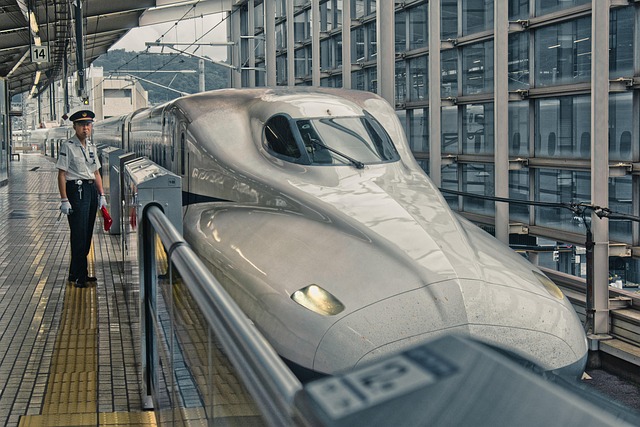
In Kyushu, the journey is truly the destination. The island’s investment in unique rolling stock—trains with wooden interiors, panoramic windows, and onboard libraries—is a signal to the traveler to slow down. My professional advice? Don’t try to see every prefecture. Pick two regions—perhaps the volcanic north and the subtropical south—and allow for “buffer hours.” When you stop treating Kyushu like a checklist and start treating it like a regional narrative, the logistical hurdles vanish, replaced by the hospitality that only Japan’s third-largest island can provide.
KEYWORDS: kyushu train travel, japanese hot spring, fukuoka cityscape
Photo: Pixabay / Pixabay License