AKIO NARIMATSU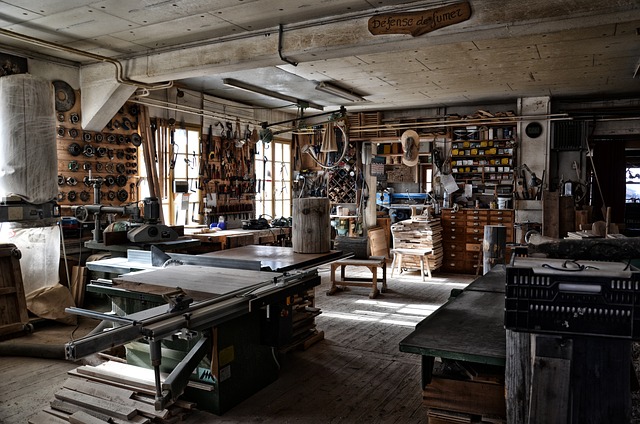
Mastering the Artisanal Trail: A Connoisseur’s Guide to Japanese Crafts and Stationery
- Seek out “Antenna Shops” in Tokyo: Located primarily in the Ginza and Nihonbashi districts, these shops are managed by individual prefectural governments and stock hyper-local artisanal goods that you would otherwise have to travel hundreds of miles to find.
- Learn the “Technical” Vocabulary: Before entering a high-end fountain pen or paper boutique, have specific terms like “shokunin” (craftsman) or “urushi” (traditional lacquer) ready; showing a baseline of knowledge often encourages masters to share their “private stock.”
- Prioritize the “Shitamachi” Neighborhoods: While Ginza has the glitz, neighborhoods like Kuramae in Tokyo and the backstreets of Teramachi in Kyoto are where the actual ateliers are located, offering a more intimate connection to the makers.
- Utilize Concierge Logistics: If purchasing delicate ceramics or large quantities of specialized washi paper, have the shop ship them directly to your final departure airport via TA-Q-BIN to avoid damage during domestic transit.
The Invisible Barrier: Why Guidebooks Fail the Niche Traveler
The standard tourist curriculum for Japan is remarkably efficient at showcasing the “what,” but it is notoriously poor at explaining the “where” and “why” for travelers with specialized interests. Most guidebooks will point you toward massive department stores or the world-famous stationery giants in Ginza. While these are impressive, they often present a sanitized, mass-market version of Japanese craft. The genuine frustration for the connoisseur lies in the “curation gap”—the realization that while you are surrounded by beautiful objects, you are still one layer removed from the authentic artisan culture.
The “real” problem is that Japan’s most prestigious craft circles operate on a philosophy of “referral and reputation.” Many of the most significant workshops don’t have English websites, and their physical storefronts are often tucked away in nondescript residential buildings or quiet alleys. Without a roadmap to these hidden hubs, travelers find themselves trapped in a loop of high-end souvenir shops that prioritize packaging over the provenance of the craft itself.
Field-Tested Strategies for the Specialized Collector
To truly penetrate the world of Japanese stationery, pens, and traditional crafts, one must look toward the “cluster” strategy. In Tokyo, the Kuramae district has quietly evolved into the city’s craft capital. Instead of the corporate polish of major retailers, you will find shops like Kakimori, where the focus is on the tactile experience of ink and paper. The secret here is to look for “open studios” (kobo), where the retail space is secondary to the workspace.
In Kyoto, the key is to move away from the primary tourist thoroughfares. Specialized ink and paper enthusiasts should focus on the Teramachi-dori corridor, but with a specific eye for the smaller, single-specialty shops that have occupied the same storefronts for centuries. A crucial field-tested hack: when you find a shop that aligns with your taste, ask the proprietor for a recommendation for a different craft. The artisanal community in Japan is tightly knit; a master papermaker will almost certainly know the city’s best brush maker or ink specialist. This “organic referral” is the only way to find the workshops that aren’t on the map.
The Insider’s Perspective: It’s About the Lineage, Not the Label
As someone who has spent years navigating the intersection of Japanese tradition and modern tourism, I have learned that the most rewarding experiences come from understanding lineage. In Japan, a product is rarely just an object; it is the current iteration of a multi-generational technical evolution. When you buy a hand-bound notebook or a custom-ground nib, you are participating in the preservation of a specific ryu (school) of thought.
My advice to the serious traveler is to slow down. The “niche” interest isn’t something to be checked off a list; it is an invitation to engage with Japanese culture at a slower, more deliberate pace. Do not be afraid of the “closed-door” aesthetic of traditional shops. If a shop has its noren (curtain) out, it is an invitation. Step inside, acknowledge the craftsmanship first, and the commerce second. In the world of high-end Japanese crafts, the relationship between the maker and the collector is sacred—honor that, and doors you didn’t even know existed will begin to open.
KEYWORDS: japanese stationery, traditional crafts, artisan workshop
Photo: Pixabay / Pixabay License