AKIO NARIMATSU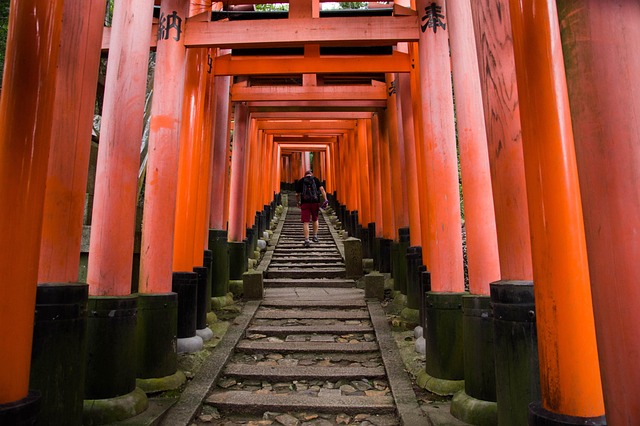
Strategic Essentials for Your Kyoto Journey
- The Sunrise Strategy: Access Fushimi Inari-taisha at dawn (5:30 AM – 6:30 AM). It is one of the few sites open 24/7, and arriving before the first tour buses transform a chaotic hike into a spiritual experience.
- The “One Bank” Rule: Never attempt to visit Arashiyama (West) and Higashiyama (East) on the same day. The cross-city transit time will consume two hours of your prime daylight.
- Curated Curation: Limit yourself to three “anchor” sites per day. Anything more leads to “temple fatigue,” where the exquisite architecture begins to blur into repetitive imagery.
- The Luggage Hack: Use the “Hands-Free Kyoto” service at Kyoto Station to send your bags directly to your hotel, or utilize the station’s extensive locker system. Navigating Kyoto’s narrow buses with a suitcase is a logistical nightmare.
The Invisible Wall: Why Guidebooks Fail Your Kyoto Planning
There is a recurring phenomenon I observe with first-time visitors to the ancient capital: the “Checklist Exhaustion.” Standard guidebooks present Kyoto as a series of standalone monuments, leading travelers to believe they can simply “collect” these sites like stamps in a book. The reality that guidebooks rarely mention is the sheer physical and mental toll of the city’s geography. Kyoto is a basin surrounded by mountains; its beauty is spread out, and its infrastructure—while efficient—is heavily reliant on buses that can become gridlocked during peak seasons.
The genuine frustration isn’t that there is too much to see—it’s that the pressure to see “everything” prevents you from seeing anything with clarity. When your schedule is measured in fifteen-minute increments, you lose the ability to stumble upon a hidden tea house or watch the light change over a Zen garden, which is precisely where the soul of Kyoto resides.
Field-Tested Strategies for a Balanced Itinerary
Mastering Geographical Grouping
The most effective way to reclaim your time is to treat Kyoto as a collection of distinct villages. If you are spending the morning at Kiyomizu-dera, dedicate your entire afternoon to the surrounding Sannenzaka and Ninenzaka slopes, eventually ending in Gion. By staying on the eastern side of the Kamo River, you eliminate the need for taxis or trains mid-day, allowing for a much more organic flow.
The Fushimi Inari Pivot
Experienced travelers know that Fushimi Inari is not a “morning” destination—it is a “boundary” destination. Because it never closes, it should be placed at the very beginning of your day (before 7:00 AM) or at the very end (after dusk). Seeing the thousands of vermilion gates illuminated at night offers a hauntingly beautiful perspective that 99% of tourists miss because they are following a standard 9-to-5 guidebook schedule.
The “Sacrifice” for Quality
One of the most powerful hacks for a successful trip is the intentional omission. If you are visiting the Golden Pavilion (Kinkaku-ji), consider skipping other “gold-standard” crowded temples in favor of the nearby Ryoan-ji or the quieter sub-temples of Daitoku-ji. By sacrificing one “must-see” blockbuster, you gain three hours of tranquility in a space that feels like your own private discovery.
The Insider’s Perspective: Embracing the “Ma” of Kyoto
In Japanese aesthetics, there is a concept called Ma—the beauty of empty space. This is the missing ingredient in most modern itineraries. As someone who has navigated the evolution of Japan’s tourism industry, I have seen that the most memorable trips are those that leave room for the unplanned.
Kyoto is not a museum to be checked off; it is a living city that requires a slower pulse. My recommendation to the elite traveler is this: look at your current itinerary and cut it by 30%. Use that reclaimed time to sit by the Kamo River, explore the Nishiki Market without a deadline, or simply get lost in the backstreets of Pontocho. Your goal should not be to see the most temples, but to have the most profound encounter with the atmosphere that those temples represent. In Kyoto, less is almost always more.
KEYWORDS: kyoto temple, fushimi inari, travel planning
Photo: Pixabay / Pixabay License