AKIO NARIMATSU
Mastering the Logistics of the Japanese Archipelago: A Professional Guide
- Leverage the “Hands-Free” Network: Utilize Takkyubin (luggage forwarding) services between every major hotel. For roughly $15–$25 per bag, you can skip the stress of hauling luggage through crowded stations.
- The “One-Night” Strategy: When forwarding bags, they often arrive the next day. Pack a compact overnight bag with essentials so you can enjoy a seamless transition without waiting for your main suitcase.
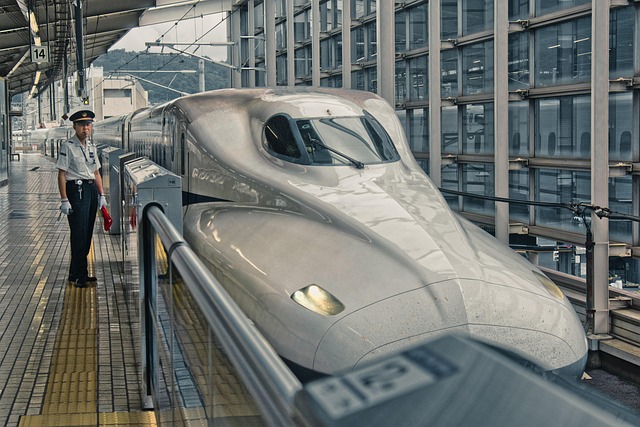
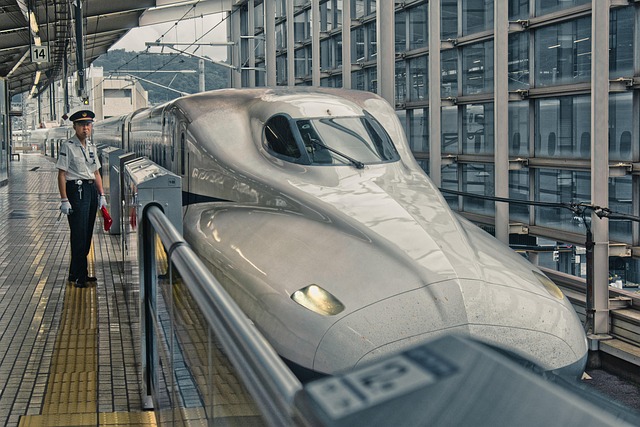
- Respect the Oversized Rule: On the Tokaido, Sanyo, and Kyushu Shinkansen lines, luggage with dimensions exceeding 160cm requires a specific “oversized baggage” seat reservation. Book these in advance to avoid a 1,000 JPY penalty and logistical headaches.
- The Hub-and-Spoke Model: Instead of moving hotels every two nights, choose a central “hub” like Osaka or Nagoya and use your JR Pass for day trips. This eliminates 70% of packing and unpacking time.
The Invisible Burden: What Guidebooks Forget to Mention
Traditional travel guides are excellent at highlighting the golden pavilions of Kyoto or the neon lights of Shinjuku, but they often fail to address the physicality of Japanese infrastructure. Japan is a society built on efficiency and “human-scale” design. This means narrow staircases in older subway stations, compact elevators that barely fit two people and a suitcase, and hotel rooms where a large checked bag cannot be fully opened on the floor.
The genuine frustration for most travelers isn’t the language barrier—it’s the “transit friction.” Dragging a heavy suitcase through a crowded station during the 8:00 AM rush in Tokyo isn’t just exhausting; it’s a breach of local social etiquette. This friction can quickly turn a dream vacation into a series of logistical hurdles that drain your energy before you even reach a shrine or museum.
Field-Tested Hacks for Seamless Movement
To navigate Japan like a seasoned professional, you must rethink how you move your belongings. The secret to a stress-free itinerary lies in logistical decoupling. Do not move your body and your bags at the same time.
Experienced travelers use the luggage forwarding service at the airport or their hotel front desk to send their primary suitcases two stops ahead. For example, if you are traveling from Tokyo to Hakone for one night and then to Kyoto, send your large bags directly from Tokyo to Kyoto. You travel to Hakone with only a backpack, enjoying the scenic mountain trains and cable cars without the weight of a heavy suitcase. By the time you check into your Kyoto hotel the following afternoon, your bags are already waiting in your room.
Additionally, make use of the ubiquitous coin lockers found in almost every station. However, the “pro tip” is to look for the digital locker banks that allow you to check availability via a QR code or an app, saving you from wandering through the station’s basement levels in search of an empty unit.
The Insider Perspective: The Art of Spatial Freedom
In my years of consulting for inbound tourism, I have observed that the most successful trips are those that prioritize spatial freedom. In Japan, space is a premium commodity. When you reduce your physical footprint, you increase your ability to be spontaneous. You can duck into a tiny, eight-seat ramen shop or hop on a local bus that would be impossible to navigate with luggage.
True luxury in Japan isn’t found in the size of your suitcase, but in the lightness of your transit. By mastering the forwarding systems and adopting a minimalist approach to movement, you aren’t just managing logistics—you are reclaiming your time and mental energy to actually experience the culture you came to see. Travel in Japan is a dance; don’t let your luggage be the lead weight that stops the music.
KEYWORDS: japan luggage delivery, shinkansen train, luggage locker
Photo: Pixabay / Pixabay License